Pandemic travel: Should we be booking holidays yet?

Well, we’ve gone and done it. We’ve booked a holiday. For 12 April. For those who are unaware, 12 April is the current planned date for various lockdown restrictions being eased in England. Non-essential shops will be allowed to open. Outdoor attractions such as zoos and theme parks will be allowed to open. Hairdressers and beauty salons will be allowed to open. Public buildings such as libraries will be allowed to open. Outdoor hospitality will be allowed, so beer gardens and cafés with outdoor seating areas will be all go. But most importantly, overnight stays in self-contained accommodation will also be allowed.

Like most people, I waited with bated breath for the government’s ‘Covid roadmap’ announcement. Of course, lots of it was relevant to me, but one thing I was really interested in was how the proposed lifting of restrictions was going to affect our holiday plans. We already had four holidays booked for this year, three of them carried over after being postponed last year – and that didn’t even include our main summer holiday. Would we be able to go on any of them? Well, after the announcement, we did at least have some answers. Unless things don’t go as well as they are hoped, and depending on the situation in other countries of course, we should be able to go to Mexico in October as planned. Again, as long as things go according to the government’s plan, we should be able to go on our booked camping holiday in Dorset at the end of May, albeit with a few restrictions still in place. We were (are?) hoping to go to Corfu in the summer, after cancelling last year, but we’re not willing to book anything yet; the roadmap suggests that all restrictions will have been eased by then, but that may not be the case in other countries, even if everything is going well here. Another issue is vaccinations – the government’s aim is to have given every adult in the UK their first vaccine by July, but will we have had our second one? Greece is one country that is talking about vaccination passports to allow entry – will one vaccine be sufficient? (And even if it is, will we still feel safe to travel?) What about children, who won’t have been vaccinated? There are still a lot of questions to be answered before we even consider booking anything abroad – however, because Greece (or abroad in general) isn’t a definite ‘no’, we also don’t want to book something in the UK and then wish that we hadn’t because it turns out we could have gone somewhere further afield (and warmer!).

However, one thing we did find out for certain was that our trips to the Netherlands and Portugal were off. The government announced that the earliest date at which international travel might start again would be 17 May – a week or so after our planned trip to Sintra in Portugal to celebrate my husband’s impending ‘big’ birthday. It also meant that we wouldn’t be able to go to Center Parcs in Holland for Easter, which was pretty much what we had expected to be fair. Cancelling wasn’t entirely a straightforward affair, as the resort is currently open (unlike last year, when the park was closed) and we weren’t quite sure where we stood. However, one email later and they have agreed to cancel the holiday and we are awaiting a voucher for the value of what we paid, to be booked again at a later date. Portugal has been simpler – we booked in October last year, knowing that there was a strong likelihood that we wouldn’t be able to go and would have to cancel. Therefore, the hotel wasn’t actually paid for yet and could be cancelled for free up to 24 hours before arrival. The British Airways flights were booked at a time when it was clearly stated that we could rebook or get a travel voucher if we chose to cancel. Accordingly, I cancelled the flights and was sent a voucher for the value the next day. While BA effectively still has our money, this can at least be used to pay for or be put towards flights in the future, so we’re not really out of pocket.

Still, while we won’t be able to travel abroad until at least 17 May, and won’t be able to stay in a hotel even in the UK until the same date, the important thing is that overnight stays in self-catering accommodation will (hopefully) be allowed from 12 April. This is the Monday of the second week of the school Easter holidays and my husband already had the week booked off work for our ill-fated Center Parcs trip. It would be silly not to take advantage, right?!

For those without children and/or with flexible jobs, this probably sounds a bit mad. Why book a holiday on the very first day that lockdown restrictions are eased? Why not book something for May or at least later in April? Why not at least wait a bit before booking? After all, there’s a very real chance that things won’t go according to the government’s plan and the date will be put back a bit – it certainly wouldn’t be the first time. The trouble is, as parents of school-age children, we are very restricted as to when we can go (at least, we are if we take the children with us!). Monday 12 April is the beginning of the last week of the Easter holidays, so it is the only time when we’d be able to go anywhere before the end of May. Basically, it’s a case of book for then or don’t bother booking at all. Also, although my husband’s work holidays aren’t set in stone, they are restricted to when other people in his (virtual) office aren’t off work, which can make school holidays difficult. Having already booked that week off work, it may well be that cancelling it would be pointless, as he wouldn’t be able to book a convenient time off later in the year to ‘replace’ it. And what’s the point of having the week off work and spending it in your house (where you already spend a hell of a lot of time at the moment) when you could be on holiday?!

Of course, we still wouldn’t have booked it unless it was cancellable, and that is absolutely key with booking any holidays in the foreseeable future. This particular holiday can be cancelled for free up until two weeks beforehand, after which the refund decreases incrementally as you get closer to the date of the holiday. We are crossing fingers that if there are likely to be any changes or delays to the government’s planned relaxing date, we’ll know by that point. I am ASSUMING, but I have to say that it’s not clear from everything I’ve read so far, that if things change and overnight stays are not allowed, the property will have to cancel the booking rather than us, and we will be entitled to a refund, or at the very least the opportunity to change dates. However – and this is important to look out for – we will NOT be covered if we have to cancel due to having to self-isolate (or, to be fair, for any other reason). When we booked accommodation last year, there was clear guidance around refunds for any Covid-related cancellations, including becoming ill yourself or having to self-isolate (at least with the company that we were and are using). This year that has changed: there is a clear note on the website stating that the property’s cancellation rules (which vary across properties) apply even if your reservation is affected by Covid-19. As I said, I’m assuming that when the cancellation is made by the property owners rather than yourself this is a different situation, but I am not certain. Either way, we are aware that we are taking a risk in terms of cancellation at our end, but we are crossing our fingers. This is one reason why it is important not only to have travel insurance but also to check how it is impacted by the current pandemic; some policies may have exclusions on any cancellations, medical treatment, etc. that are due to Covid, so don’t rely on it covering you.

It’s also important to remember that the concept of a refund is subject to different interpretations. Obviously the ideal situation is a straightforward refund, where the money is paid back into your account, which is what happened when Travel Republic cancelled our holiday to Corfu last year. More common is a refund in the form of a voucher or credit note – this is what happened with BA, as was clearly stated when we booked. This is also what happened with Center Parcs both times, including the first time when the holiday was cancelled by them rather than us, as the resort was closed. My gut feeling is that we should have been entitled to a refund in this situation, where they cancelled the holiday rather than us, although I am not sure what the legal requirements are, particularly when the holiday is booked direct with a company/property in another country. It didn’t bother us, however, as we were happy to use the voucher and book again in the future. Our email also states that if you don’t use the voucher before it expires (it has an expiry date of a year), you will be refunded your money a month later – so you do get a refund, but you just have to wait for it! The campsite for the holiday that we booked last May also gave us a credit note for our (admittedly small) deposit, which we used to rebook for this year. Again, I’m not sure of the legality of this, given that they were closed and cancelled the booking themselves but still made it clear that refunds wouldn’t be given but, again, we didn’t mind reusing our deposit for another year. One point to bear in mind here is that the travel industry has taken a massive battering, and everyone involved, from small B&Bs to airlines and large travel agents, has lost a lot of money because of the pandemic. If we are able to help a little by accepting a credit note rather than a refund, then we are happy to do so – after all, we are bound to use them for future holidays. And that’s what it really comes down to when deciding to book – if your only refund option is a credit note/voucher, would you be able to use it? That may be easier for something general like flights but not so much for a specific cottage booked as a pandemic getaway. Do you need the money or are you happy to leave it ‘in the care’ of’ the holiday company? Would that actually be a good way of making sure future holidays are paid for without ‘accidentally’ spending the money? Or would you rather have the money in your pocket, perhaps because your situation has changed and things are tighter or because you would rather book somewhere/something else? These are all things to consider if you are thinking about booking a holiday at the moment. But if you are able to cancel close to your departure date and/or you would be happy to accept a credit note – or even better, like our hotel in Portugal, you don’t even have to pay until the last minute so won’t lose anything by cancelling – then there’s no real reason why it isn’t worth crossing your fingers and booking things right now, according to the government’s roadmap.

Of course, there is also a whole other issue around whether we should be booking holidays that has nothing to do with refunds: is it safe? This is a question I clearly can’t answer and one that people will have their own ideas about. I could argue that if something is ‘allowed’ then it should be at least relatively safe, but just because you are allowed to do something doesn’t mean that it’s a good idea – something that could be argued in many contexts! I think the second surge in Coronavirus cases in the UK as restrictions eased is a clear indication of this. We may have been allowed to go to restaurants – ‘eat out to help out’, anyone? – but was it safe? Was it a good idea to get on a plane and fly to Spain just because we were allowed to? Were our children safe going back to school because the government had deemed it okay? We will, of course, all have our own valid opinions on such questions. There will be plenty of people who had a whale of a time going out last summer while sticking to the guidelines and, as far as they know, didn’t catch the virus. A large part of me wishes I’d just bitten the bullet, crossed my fingers and left the country for a break last summer, especially when I see other people who did so and don’t regret it. All of that said, the rise in cases as restrictions were eased demonstrate that we can’t be complacent. Hopefully we will be in a different situation this time around, as more and more of us are vaccinated. But booking holidays simply because we’re allowed to may not necessarily be a good idea!

And yes, I know I’ve just done exactly that. But the other issue when it comes to safety is the type of holiday we’re talking about. If we were legally allowed to fly to the Caribbean right now, I wouldn’t do it (much as I’d like to!). If we were allowed to stay in a hotel, I don’t think I would either. The key with the self-contained accommodation that we’ll be allowed to book as from 12 April (hopefully!) is that it is SELF-CONTAINED. This means that you will not be sharing facilities with anyone else. There is no need to even come into contact with anyone else. And this, as far as I’m concerned, is a pretty safe way to holiday. There will be a very minimal contact risk with the surfaces in the cottage, apartment or anywhere else you might be staying, but as long as the property has been cleaned thoroughly, this risk is very low. Other than that, your risks are potentially no lower than if you stayed at home. Self-catering accommodation means that you don’t have to go out to eat – not that you’d be allowed to in April anyway! Yes, you might get a takeaway, but then you might do so if you stayed at home. Your daily activities can be as ‘safe’ as you want them to be. You may simply want to stay inside, in surroundings that are different from your own four walls. You may fancy going to a theme park or a wildlife park or having a game of crazy golf, but there is no obligation to do so – plus they may be the sort of things that you’d do if you stayed at home too. You may simply go for walks, just as you’d do at home but with some different views to look at. Many arguments could potentially be made about staying in a hotel (Where do you eat? What about all the shared areas?) but staying on your own in self-catering accommodation is about as safe as you can get right now.
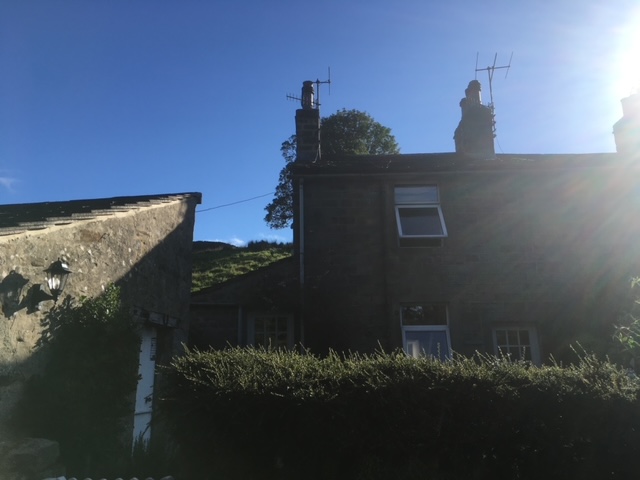
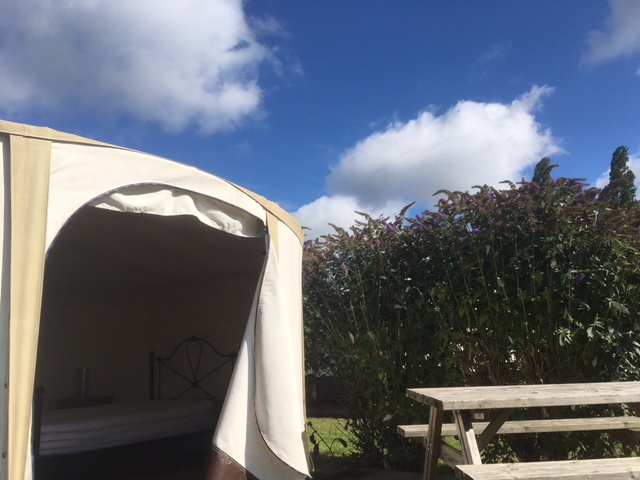
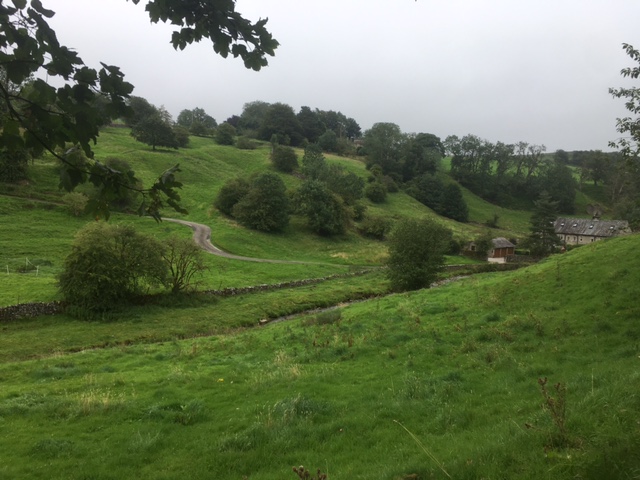
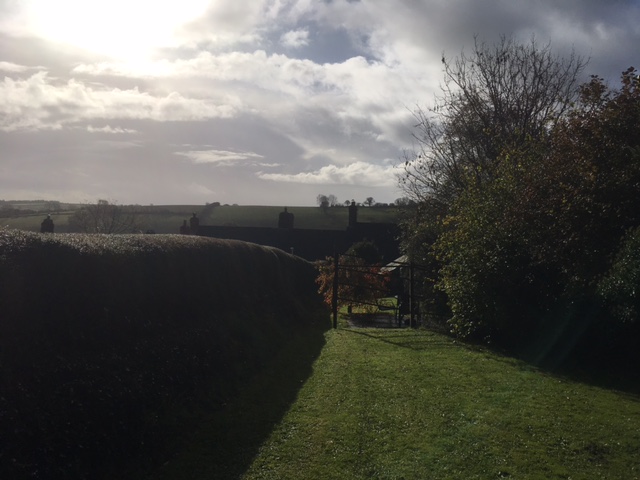
Our three holidays last year (not including pre-Covid times!) were self-catering. The first, in a yurt on the Norfolks Broads (Pandemic travel: A yurt in Norfolk), wouldn’t be allowed this April, as it involved using shared washing and toilet facilities, but the cottages we hired in Yorkshire in August and Devon in October provided pretty much the same sort of holiday that we’ll be having in April, in a cottage in a different part of Devon. A key change this time is the closure of indoor hospitality; although it should be possible to have a meal or a drink in a pub garden, the pub itself will be out of bounds (except, perhaps, for the toilets? Not sure where we stand on that!). This isn’t an issue for us – much as we love going out to eat, and much as this is one of the main focuses of our holidays during non-Covid times, it’s not something that we’d feel comfortable with at the moment anyway. Unlike many people, we didn’t feel comfortable with it last summer either. We ate inside a couple of times – once during the day when it was raining and we didn’t really have much option, and once in the evening when we were desperate to treat ourselves and researched our restaurant carefully, ensuring that it had lots of space and was taking sensible precautions. The rest of the time we ate at ‘home’, had picnics, ate outside at cafés and pubs or had a takeaway – all of which also should be an option in April. However, if eating in restaurants or going to the pub is a vital part of your vacation and it wouldn’t feel like a proper holiday without it, you may want to hold off on booking anything too soon. In fact, you may not even want to book for too soon after 17 May (the next planned date for easing restrictions), just in case things change. One reason why we cancelled last year’s holiday to Mexico early (although it turns out that we wouldn’t have been able to go in the end anyway!) was that we knew it wouldn’t be the same. It was a long way to go and a lot of money to spend, and we wanted to enjoy everything that Mexico and the resort had to offer. We didn’t want to get there and find out that the attractions were closed, only one restaurant was open and you had to wear masks on the beach – that wouldn’t have been the sort of holiday we wanted or had paid for! So, if you are thinking of booking something now, it’s important to consider whether you’d still want to go if certain things weren’t open or available, or whether you’d rather save your money and annual leave for a time when everything is on the metaphorical menu!
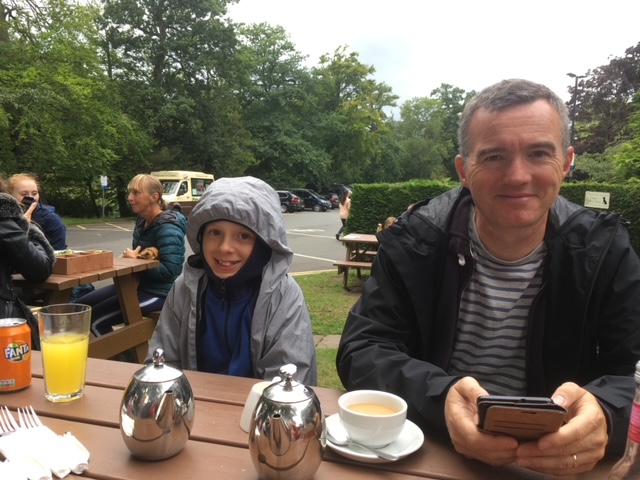
One of many outdoor meals, shortly before the umbrella was put up to keep us dry!

So, should we be booking holidays yet? There are plenty of people out there (particularly those in the travel industry!) encouraging us to do so, while plenty of others are urging caution. At the end of the day it is obviously a personal decision, but there are a few things to bear in mind. Would you be able to cancel if the situation changed? Would you be happy to accept a credit note rather than a refund? Would your insurance cover you for Covid-related changes? Would you feel safe in the type of accommodation that you are considering? Would you still be willing to go if restrictions meant that certain things weren’t available? If it’s a ‘yes’ to all those questions, then it’s a no-brainer – what have you got to lose?! I can’t answer ‘yes’ to all those questions for some of the holidays that we’re considering this year, so I’m hanging fire on those. When it comes to holidays abroad, the possible need for vaccinations is still one unanswered question, for a start. But when it comes to a cancellable cottage in Devon, where we barely need to see another person if we don’t want to, it’s a resounding yes. April holiday, here we come!
Pandemic travel: A yurt in Norfolk

By July 2020, like most of the world, I was ready for a holiday. I needed a change – I was tired of sleeping in the same bed, sitting on the same sofa, eating at the same table and seeing the same sights on my walks. I also needed a break; because there seemed to be no good reason not to, I had worked through the Easter and May half-term holidays, when I’d normally go away. Weekdays and weekends were blurring into one. I needed some time away from work, chores and the daily grind – which had obviously been proving difficult during lockdown.

Things had already started to change in the wider world: shops had been open for a couple of weeks, pubs and restaurants had just opened and we were finally allowed to spend the night away from home. But although we were yet to hear of the official cancellation of our holiday to Corfu, we knew that it wasn’t going to happen as our apartments had decided not to open. And although holidays abroad were now happening generally speaking, we just didn’t feel comfortable about it. No judgement on those who decided to go for it – in hindsight, with cases as relatively low as they actually were at the time (in comparison to now, at least), perhaps we should have taken the plunge. But we didn’t like the idea of being on a plane for hours with people who could have had the virus, nor did we want to be in an airport. We were very concerned about what would happen if any of us were to catch the virus while we were away, and we were worried about the possible need to quarantine on return – things were constantly changing (as they tend to do in a pandemic), with different rules for different countries, and it was just one unnecessary risk too many.

So that left us looking at the UK. We booked a cottage in the Yorkshire Dales for August, when we should have been in Corfu, but my husband had a few days more to book off work and we wanted to go somewhere sooner – it had been a long time, after all! Only staying for a few days, however, is a little limiting. A lot of the cottages that we looked at were booked up or wanted us to stay for a week minimum during the summer holidays. Normally for a short break we’d head to a Premier Inn or similar. However, because of the virus, we weren’t massively comfortable with the idea of staying in a hotel. We weren’t so much worried about the room but we were a little concerned about communal areas. More importantly, it left us a bit stuck for food – where normally we’d go out for dinner (happily – great excuse!), we weren’t comfortable with eating indoors in public spaces. We’d spent the last few months being told not to go near anyone, and while we had graduated to a place of being okay eating in pub gardens, we hadn’t got to the indoors bit yet. This, of course, left us with self-catering – which was the plan for our cottage later in the summer. We thought about camping, which is a big self-catering favourite of ours but is less appealing for a short break. Our tent is big and takes a long time to put up – not so bad for a week, but time-consuming when you’re only going for a few days, especially when we couldn’t leave until the afternoon, as my husband was working a half-day.

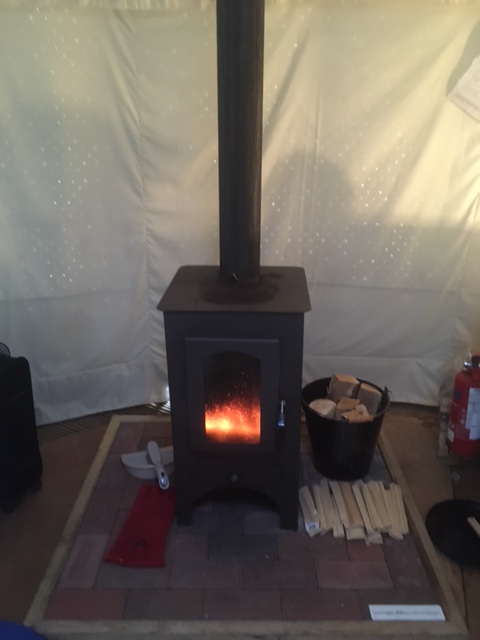
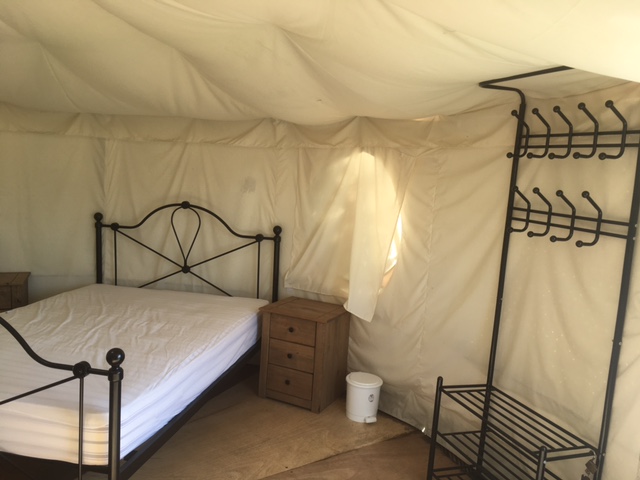
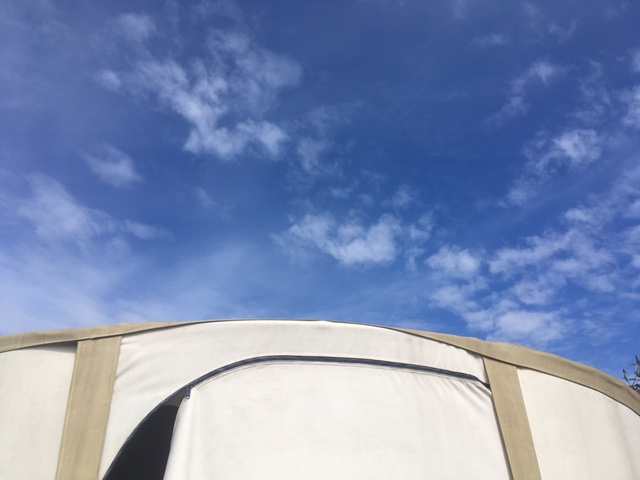
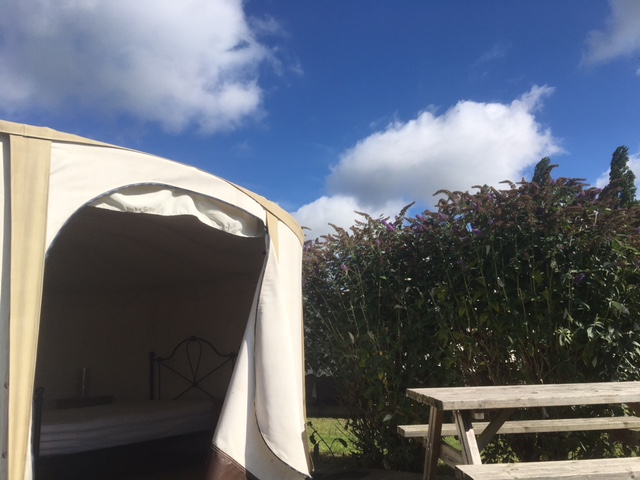
We eventually settled on a yurt in Norfolk as a compromise: all the self-contained benefits of camping but without the hassle of putting up a tent or inflating airbeds! We booked a four-person yurt at the Waveney River Centre in Burgh St Peter on the Norfolk Broads, which also offers ‘escape pods’, standard camping/caravanning and a variety of other holiday accommodation. We’d always shunned such things as yurts and pre-erected tents before, not really seeing the point. If you’ve got your own tent and camping equipment, why pay so much more to sleep in one that someone else has prepared for you, even if it is a bit more comfortable?! But actually, this worked out perfectly for us. It had a double bed and a sofa bed for the children, and although we had to bring our own linen/sleeping bags, it was a lot more comfy than our usual air bed! It had a couple of chests of drawers – just a little thing but when you’re basic campers like we are, it was quite exciting to have something into which to unpack our clothes, plus a few surfaces to put things on! It had electricity and lights – no more torches and charging everything up in the car. It had a couple of chairs and a picnic table on decking outside, so we had our own area where we could cook and eat. And, most importantly, it had not just an electric heater but also a wood burning stove! Now you might think that, in July, we wouldn’t need one – but you’d be wrong. The nights were chilly and having a heater (a luxury we’ve never had when camping) was an absolute godsend. We used the stove too on the first night, but never again – my goodness, it kicked out a lot of heat! I ended up sitting on the floor to avoid the rising heat, but it would be lovely and cosy if you were camping in colder weather.
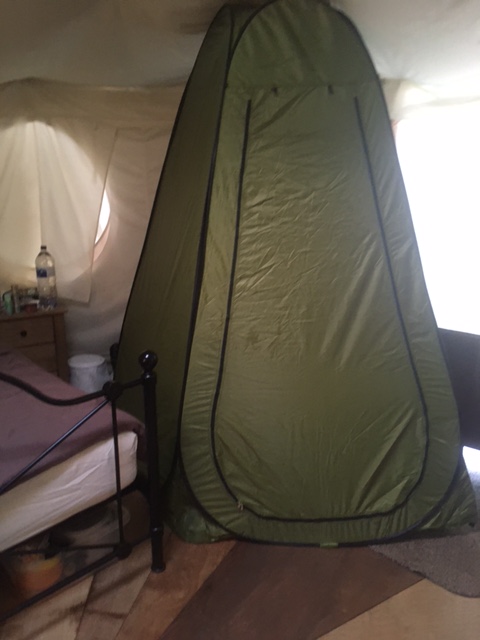
So what did we still need to bring? Well, sleeping bags and pillows for a start, as mentioned earlier (or sheets and duvets – whatever floats your boat!). A camping stove. Pots and pans, kettle, plates, cutlery and all the usual cooking equipment – plus food, of course! I honestly think that was pretty much it, as far as camping stuff goes – although I mustn’t forget to mention my camping toilet! Now over the years this has become an essential. As a woman of a certain age, it’s a foregone conclusion that I’ll need the loo in the night at least once (usually more!) during the holiday – and it’s not nice leaving the tent in the middle of the night to walk across the campsite (sometimes a long way!) to the toilet block in your PJs. So eventually we invested in a camping toilet – basically a bucket with a toilet seat and a lid. In our tent, this is fine – we put it in the (enclosed!) porch and I have somewhere to go out of the way in private. But how was this going to work in a yurt with all four of us sleeping in the same room? I didn’t really fancy one of the boys waking in the night and getting an eyeful (hopefully not literally) at the wrong moment! So I bought a toilet tent – one of those pop-up things that you basically use to go to the toilet in private. It was honestly the funniest thing setting it up in the yurt – it was huge and had to come down during the day – but it worked a treat for night-time toilet visits, with space for toilet roll and anti-bac and even somewhere to hang a torch. Honestly – best buy ever.

The toilet tent – best buy ever!

The main question at that time, of course, was how Covid-safe our holiday was. We were obviously able to do our own cooking with our own equipment, so that wasn’t a worry. There were very few items in the yurt for potential touch-contamination. The site’s Covid policy stated that everything had been cleaned extra thoroughly but we went over it all with Dettol just to be extra safe – after which, unlike a hotel, we knew that we were the only people touching anything inside our accommodation. However, the yurt didn’t come with a shower or toilet (apart from my bucket!), which meant that we did have to use some communal facilities – as well as the washing-up area. This was unavoidable in the yurt, although I know people who have gone camping and even brought their own shower facilities! I wasn’t too worried though. My reasoning was that you’d be touching very little in the toilet anyway and the last thing that you’ll do is wash your hands – and washing is the whole point of a shower! Of course, being near other people is also a risk – probably more of a risk than touching contaminated surfaces. However, this risk was minimised by every other toilet and sink being cordoned off in the toilet area to avoid you being too close together, as well as leaving the door open for ventilation. The risk in the showers was even further reduced by basically having your own room, rather than a cubicle in a shared bathroom. There were also plenty of hand gel dispensers dotted around, particularly next to doors, so it was always easy to disinfect after opening or closing one (if it wasn’t open already). We also brought a big bottle of anti-bac gel for the yurt so that we could still ‘wash our hands’ as soon as we got home from anywhere! All in all, although nowhere could be deemed 100 per cent safe, we certainly felt that our chances of catching Covid while at Waveney were pretty low.

The biggest risks came not from the yurt or the holiday site but from days out – the more you get out and about, the more you come into contact with other people, the more things that you touch and the more virus you’re potentially exposed to. We stayed safe (as far as we could) and avoided indoors, choosing to go for walks, hire a boat and eat outside. Of course, we ended up in some places that were busy and took risks every time we used a public toilet or ate in a pub garden, but we did our best to mitigate the risks by hand-washing frequently, wearing a mask if we ever did have to go inside and trying to keep as far away from people as possible. I figured that we were taking no more risk than we would have done if we’d stayed at home rather than go on holiday, as we would still have ended up going out out and about – in fact, if anything, we were probably more careful on holiday, as we were more aware of the risks. There were plenty of Covid-safe activities to do in the area – and there are no doubt many more less Covid-friendly options too, for when life finally gets back to normal. If I can get organised, I’ll write about these in another blog post! In the meantime, if you are looking for somewhere to stay in the UK this summer when things hopefully start opening up again, and especially if you are still being cautious – or perhaps if we are still very restricted – then ‘camping’ in a yurt is a great option, and I’d highly recommend Waveney River Centre as a brilliant Covid-safe option!

How do you write a travel blog when you can’t travel?

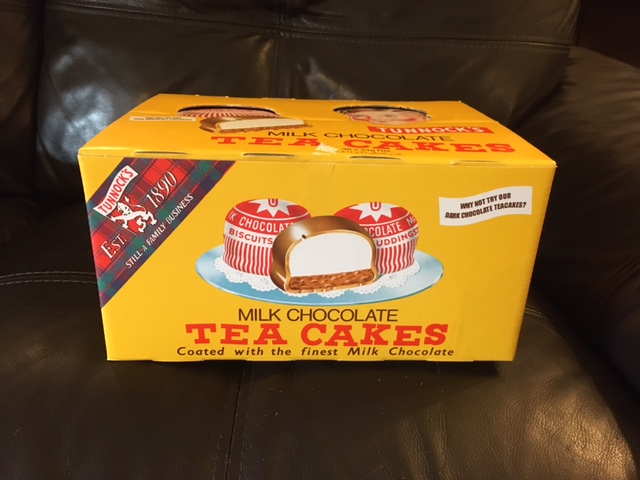
When I wrote about occasional blogging back in May 2019 (The pros and cons of being an occasional blogger), and commented on how long it was since I’d last blogged (a month or two), I really had no idea what constituted ‘long’ – try over a year! I can’t even blame COVID entirely, as my last post was in December 2019, three months before lockdown hit and my travel plans were disrupted. I remember thinking about blogging at the beginning of lockdown – how maybe I’d have a bit more time to devote to it, given that I’d spent the last few months working and not blogging. Of course, that was a little short-sighted – why exactly did I think I’d have more time?! Sure, if I was furloughed it would have been a different case. But as I work from home anyway, things didn’t really change in that respect. Work continued as normal, daily chores still needed doing. Sure I’ve spent some of the last year not needing to do the school run or take the kids to their various activities, and my social life has taken a definite dive. But that has been replaced with the kids spending much of the past year at home, meaning time spent helping them with homeschooling – plus extra tidying. I’ve also upped my exercise in the hope of making up for being stuck at home and in an attempt to counteract the effects of my daily Tunnocks Teacakes (yes, that was a deliberate plural). So, all in all, I’ve had no extra time – possibly less than before, in fact.

Of course, time isn’t the only – or even the main – reason why I haven’t blogged for over a year. It’s pretty hard to write a holiday blog when you can’t go on holiday! Who wants to read me wittering on about all the holidays I’d like to go on but can’t?! The frequency of my Twitter and Instagram posts has also much reduced too, as I have very little new to say or post. It’s not like I haven’t still got old holidays I could blog about, mind you – I think only one of five holidays in 2019 actually made it onto the blog after all, so it’s not like I haven’t got the ‘material’. But I’ve also lost enthusiasm – rehashing old holidays is no fun when you have no idea when you’ll be able to go on another one. I’m also not convinced that people would want to read a holiday blog right now either. I know I don’t much enjoy vicarious travel unless I can use it as inspiration for planning future trips. Writing about holidays feels a bit like rubbing people’s noses in it, even if I’m not going on any either.

This got me thinking about ‘proper’ travel bloggers – those who earn a living (or at least part of one) from blogging about travel. The past year must have been really difficult for them, when their ability to travel has been either greatly reduced or stopped altogether, depending on where they’re based and what risks they’re willing to take. It’s not even like restaurants or days out have been available for a large chunk of the past year! I doubt that hotels or tour companies will have been keen on sponsorship, as they’re likely to have had to cut costs. And I suspect that readership will also have reduced – travel blogs will get much of their traffic from people planning trips, and not many people are doing that right now. The travel industry has been hit very hard by the pandemic, and the travel blog community will have been one of many casualties. It’s certainly made me feel very lucky to have a regular income and a job that hasn’t been affected by the virus, and relieved that holiday blogging has only ever been an occasional hobby for me.

But of course one of my main hobbies is actually going on holiday – and that hobby has taken a major hit. Early 2020 saw the postponement of a trip to Center Parcs in the Netherlands at Easter, although we held on desperately, hoping that things would magically get better. They didn’t, of course, and it’s now looking likely that this Easter’s rebooked Center Parcs trip will have to be postponed yet again. We held out hope for our camping trip in Dorset for May half-term – after all, no planes, ferries or other public transport, no hotel room, no shared inside area – just us in our own tent, cooking our own food and keeping to ourselves. Of course, we were still in lockdown by the time half-term came, and that was another holiday postponed until 2021. We started thinking about our October holiday in Mexico. Surely everything would be okay by then?! But what if we were still having to take precautions? What if we had to wear masks for the whole 12-hour flight? What if the hotel buffets were closed? What if we had to wear masks on the beach? What if not all the promised activities were offered? What if attractions like Chichen Itza were closed or you had to wear masks? (The obsession with masks comes from being an asthmatic who struggles in humidity – breathing while wearing a mask in hot weather is hard enough, without attempting to move at the same time.) We decided that the safest thing would be to postpone Mexico until October 2021. Even if we were ‘allowed’ to go, we didn’t want to pay all that money and go all that way for a ‘once in a lifetime’ trip where we couldn’t do and see everything that we wanted to, and which would be ‘once in a lifetime’ for all the wrong reasons. [Sidenote: A hurricane actually hit the resort in October 2020, so we were kind of glad we’d postponed!] We weren’t sure what to do about Corfu in August though. Would we be able to go? Would it be safe to go? Would we want to go? And if we didn’t, would we get our money back? By August, things were a little up in the air. We were allowed to travel abroad but the situation was constantly changing. There was a strong possibility that we’d need to isolate for two weeks on return, which would have been impossible as the kids were due back at school. We were concerned about what would happen if we caught COVID while on holiday. We didn’t feel very confident about the idea of being confined on a plane with other people who may have the virus. And, actually, our apartment complex had decided not to even open, which made our decision a little easier! Our holiday company eventually officially cancelled and refunded us, and bang went our final scheduled holiday for 2020. We had thought earlier in the year about booking something for the Christmas markets, as we felt sure that it would all be over by then. Thank goodness we didn’t!

Suffice to say that 2020 was a pretty disappointing year! Of course, cancelled holidays was the least of our worries in the big scheme of things, and was trivial compared to what 2020 brought to many people. As a self-confessed holiday obsessive, cancelling holidays was upsetting, as was not being able to do so many of the other things I love, like going out to eat, catching up with friends and pub quizzes in an actual pub. Still, I kept reminding myself, it could be worse. I could have COVID. I could have lost someone to COVID. I could have lost my job or my business, be furloughed or facing an otherwise uncertain work or financial future. I could have been in a job where I had to go out to work every day and put myself and my family at risk. I could have been one of those NHS workers on the frontline, caring for people with COVID, watching them die without their loved ones, putting in stupid hours without adequate PPE and coming home exhausted, all the while knowing that my own risk of catching the virus is high. That said, I’ve never been a fan of the whole ‘it could be worse’ comparison scenario when trying to feel better about something. After all, knowing that you could have two broken legs and a fractured wrist doesn’t make the pain of one broken leg any better. And knowing that things could be worse doesn’t necessarily reduce the disappointment or misery of putting your life on hold; in fact, it probably makes it worse, as then you’re adding guilt into the mix, feeling like you have no right to be disappointed by a cancelled holiday or sad not to have seen your best friend for a few months when there are people out there literally putting their lives on the line. But I think it’s important to allow ourselves to feel sadness and disappointment, even about the little things. Most people have found the last year difficult for a whole host of reasons – that’s only to be expected, and pretending that everything’s fine or feeling guilty about down days only opens the door to mental health issues. BUT I do think it’s really important at times like these to also be grateful for what you do have and make the most of the opportunities that you have got.

I’m grateful to be working from home already and that my husband is able to work from home. I’m grateful to be financially secure and not have been impacted too much by COVID. I’m grateful that our house is big enough that we all have our own space to work and that we have enough tech for the kids to be able to do school work at the same time as my husband and I are working. I’m grateful that my kids are old enough to be able to ‘school’ themselves while we get on with work. I’m grateful that we have a garden, giving us an extra room in the summer months and providing somewhere to sit and enjoy the warmer weather. I’m grateful to live in a lovely village with the countryside on our doorstep, with abundant opportunities for beautiful walks plus plenty of local facilities. I’m grateful that I’m not only physically able to walk but that I actually like walking, as does my husband – I may be restricted but at least one of my favourite things is still doable. I’m grateful to be able to keep in touch with friends and family via social media and Zoom, if not in person. I’m grateful to have stayed physically healthy and about as mentally healthy as it’s possible to be in these confusing and worrying times, and grateful that my kids are generally coping well. When I’m feeling down or anxious (and, I confess, that’s pretty regularly), I think really hard about these things. Compared to so many people I am REALLY lucky, and I think that’s an important reality check right now.

I’m also really grateful to have managed to go on not one but THREE holidays in 2020 (and that’s not including a mini-break in February before everything stopped). Of course, none of those holidays were the ones we had originally planned. None of them were abroad. They were all self-catering, as we didn’t feel comfortable staying in a hotel. And we were fairly restricted with what we did, partly down to COVID rules and partly down to our own levels of comfort and safety. Our activities were almost exclusively outside (not that easy, as we had some shocking weather) – mostly walking, and certainly no swimming, cinema, bowling or the other things we might normally do on holiday. We mostly cooked, with the occasional take-away, and lunches were generally eaten in the garden of cafes and restaurants, as we didn’t feel safe spending large amounts of time inside. The holidays weren’t as relaxing as they normally would be, for obvious reasons, nor as warm and dry as if we’d made it to Corfu or Mexico. But my goodness, it was wonderful just to see some different sights. To sleep in a different bed. To spend evenings on a different sofa. To go for walks somewhere we’d never been. And, of course, to take some time away from work and day-to-day chores, which is extra difficult when you’re all working at home. They may not have been the holidays we’d had planned, but I’m so grateful that we did manage to get away and very aware that many people weren’t that lucky.

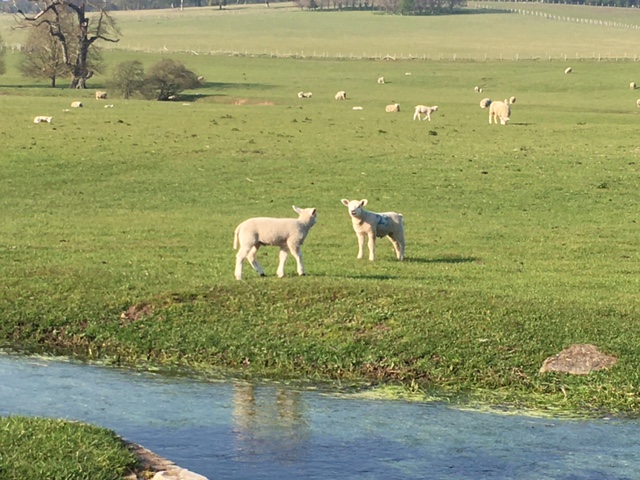
We’ve also done our best to make the best of the opportunities we have had, especially the beautiful weather at the beginning of the first lockdown. You can probably guess that we went – and still go – for lots of walks: short walks, long walks, lunchtime walks, walks after work, daytime walks with a picnic… We’ve walked every footpath in our local area and found places we didn’t know about. We’ve watched the seasons changing and seen woods full of bluebells and fields of poppies. We’ve seen newborn lambs, butterflies, squirrels and birds. We’ve really tried to take notice of what’s around us, things we usually take for granted. We’ve walked further afield, in woods, on cliffs, up hills, along rivers and around towns. We’ve also done other ‘outdoor’ day trips – beaches, picnics, castles, crazy golf and so on. We’ve explored our local cafes and eaten in their gardens. We’ve met up with friends and family outside, keeping our distance. Basically, we’ve refused to stay at home when there has been a safe option to get out. Sure, the weather has scuppered our plans on a few occasions, and it’s proving a lot harder in a winter lockdown, but we’ve done our best to ‘make memories’, to use a cliché.

So, to go back to my title question, my personal answer for the past year has clearly been ‘you don’t’. But those ‘proper’ travel bloggers I mentioned earlier have done – they’ve had to! So what have they done? They’ve written about old adventures and previous holidays. They’ve gone on walks and day trips and written about those. They’ve taken ‘staycations’ when they were allowed to and got as much materials as possible from them. Some have taken advantage of the lower virus numbers over the summer and gone on some of those trips abroad that they had planned – or perhaps different ones. They’ve written opinion posts or blogs giving general travel advice. They’ve written about travel in a pandemic. They’ve updated old blog posts. They’ve taken advantage of what’s around them more locally. They may have adapted their blogs to include non-travel-related subjects. They’ve possibly posted less than they would normally and maybe, like me, some of them kind of lost their mojo. I’d guess it must be even harder to blog about travel you can’t do when you know that the blog really counts. But travel blogs are still out there and still going strong – and with the vaccine currently being rolled out across the world and our hopes for travelling again becoming a little more concrete (Boris said recently that he is ‘optimistic’ about summer holiday prospects!), it’s likely that our appetite for travel blogs will start to grow again. We’ll be thinking about where we might be able to go this summer. Which countries will let us in? Where could we go in the UK if going abroad is not an option? Where could we go at Christmas? I’m trying to be optimistic that some of our rebooked holidays will be going ahead this year, and if they can’t then I’ll be busy planning exactly what we can do. And so, with a tiny but growing hope for holidays and a lull in work, I’m starting to get my blogging mojo back. I have three UK destinations from last year that could make it into future blog posts. I have hosts of old holidays from which I can dredge up destination guides, advice and disaster stories – hopefully without feeling sad about the holidays I’ve missed. 2021 will be my year of holidays – and if not, 2022 will be. I’ll get there eventually. But maybe, at least, 2021 will be my year of holiday blogging.

Center Parcs – time to leave the UK behind?

Eleven years ago, when my oldest son was two and my youngest wasn’t even a twinkle, we went to Center Parcs at Elveden in Suffolk. British and many other European readers will know what I’m talking about, but for those who don’t, Center Parcs is a chain of family resorts with self-catering ‘cabins’ set in a woodland setting and lots of activities to choose from. They’re famed for their swimming pools (like mini water parks), which are included in the price, and for using bikes to get about. Anyway, we went to Center Parcs because we’d heard lots of good things and it seemed like a good destination to visit as a family.

The other thing that UK Center Parcs are famed for is their extortionate school holiday prices. I know, I know, supply and demand, it’s the way of the world – and I accept that prices will always be higher during peak times. But the price hikes at Center Parcs really are something else. For example, a four-night midweek break for two adults and two children in a ‘New Style Woodland Lodge’ during May half-term is £1099. The same thing but two weeks later (when the weather is actually nicer but the kids are back at school!) costs just £529. That’s a hell of a difference!

Of course, our son was too young to be at school when we went to Center Parcs. However, both my husband and I were teachers at the time, and had long been the victims of school holiday prices. But even if we could have afforded the cost of staying in Center Parcs, we couldn’t have justified it. But then a friend and I had a plan: we would all go together and save money. By the two families staying together in a three-bed lodge, we saved ourselves a fortune in comparison to going on our own. I should probably add here that it still wasn’t cheap by a long way, but it made it just about affordable.

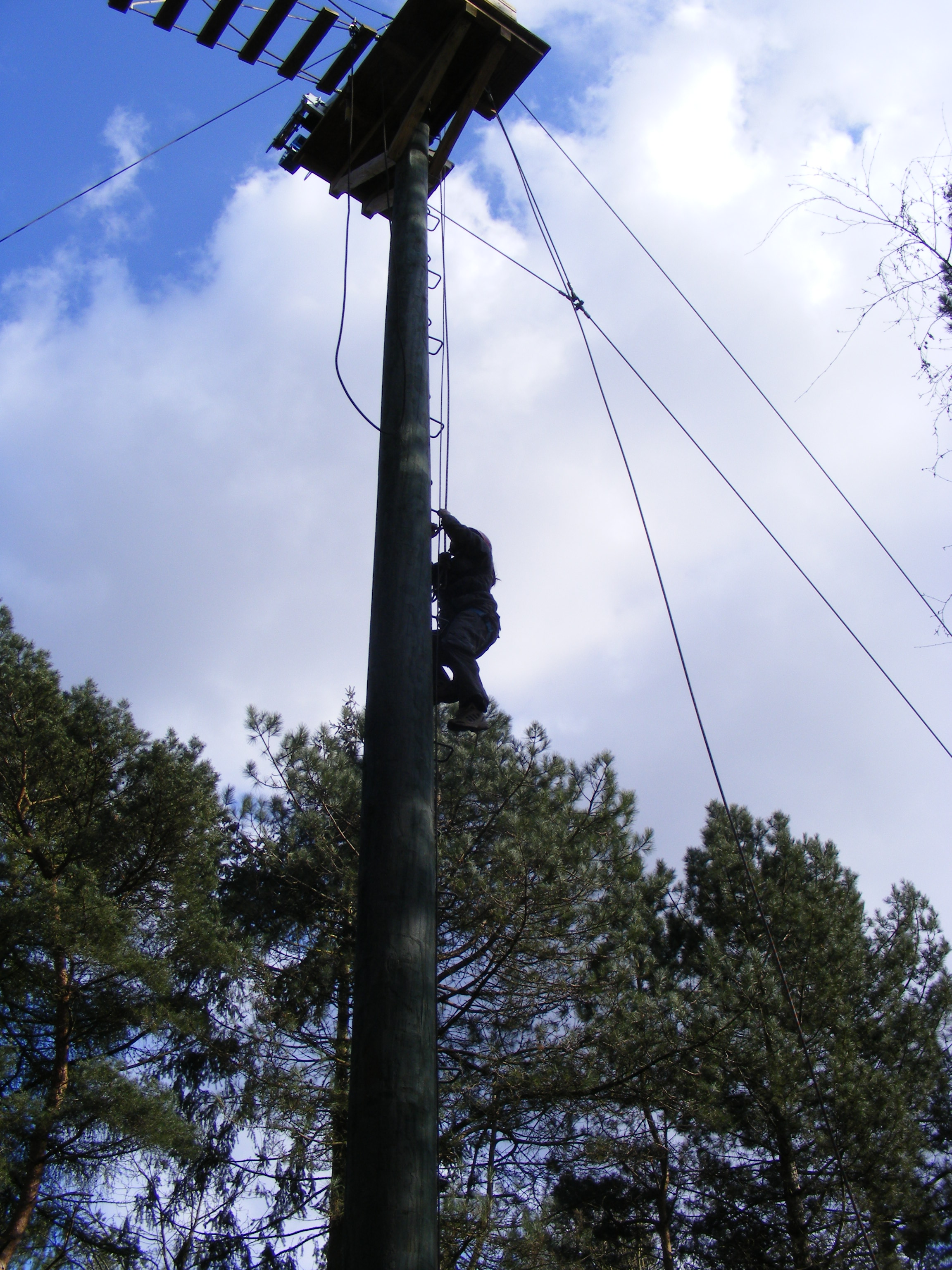
It worked pretty well. We did things together, like swimming and cycling, the husbands took the kids while my friend and I went to the spa, we took the kids while the husbands did paintballing and archery, and the kids went to a kids’ club while we played badminton, went zip-wiring and jumped off a ridiculously high pole (without doubt the most terrifying thing I have ever done!). We went out for dinner one night, hired a babysitter and went to a quiz another night and spent the rest of the time chatting and playing board games. We had a great time, and there were definitely benefits to going away with friends in addition to cost-saving. But although swimming is free – as is cycling if you bring your own bikes – you have to pay for the other activities. The prices are not particularly bad but neither are they bargains and, of course, it all adds up. So although we enjoyed ourselves and saved considerably on the cost of going on our own, a cheap holiday it most definitely was not.

Yup, that’s me…!

And this is why it was the first and last time we considered Center Parcs as a destination (until this year). Once our youngest became more than just a twinkle, and our money situation tightened and holidays became more expensive, we just couldn’t justify the cost of going to Center Parcs, with or without friends. We began to wonder what Center Parcs really offered that other holiday options didn’t. What made it so special? What made it worth spending that amount of money? We tried Butlins a couple of times. This was great for young children, it was much cheaper overall and most of the activities are free once you get there. We had a good time but it hasn’t got the ‘natural’, secluded feel of Center Parcs and it’s not such a great option for older kids. As regular readers will know, we’ve tried all sorts of different holidays over the years, favouring campsites as a great money-saving option, but we never really considered going back to Center Parcs.

The situation changed when, a few years ago, I started seeing pictures on Facebook from friends who’d been to Center Parcs in Belgium and Holland. I’m not sure it had ever really crossed my mind before that there were Center Parcs in the rest of Europe, even though the brand had actually originated in the Netherlands. But the photos showed that the Center Parcs abroad looked pretty much the same as the one I had been to in the UK, and conversations with friends suggested that they were pretty similar – just MUCH cheaper. I’m a sucker for a bargain, so this got me thinking – maybe it was worth trying a Center Parcs on the continent? It took a long time to get around to doing it, but this year, we finally decided – we were going to spend a week in the Easter holidays in one of the European* Center Parcs.

I started investigating prices. It soon became clear that the Center Parcs in France were generally more expensive than those in Belgium, Germany and the Netherlands, and that there was a theme in terms of getting cheaper the further away you went from Calais and, therefore, the UK. As you’d expect, different parks had different facilities – although broadly similar – which also affected prices. We balanced price with facilities and how far we were willing to travel, and eventually settled on Het Meerdal in the Netherlands. This was just over three hours from Dunkirk (or three and a half from Calais), had lots to do and, most importantly, was A LOT cheaper than any of the Center Parcs in the UK.

I can’t remember the exact UK price for the equivalent holiday, but I did check for comparison at the time, and it was around twice as much. I’m not entirely sure why they are cheaper outside the UK. The obvious answer would be the difference in school holidays. From what we could gather when we went, it was not the Dutch school holidays, which is bound to make it cheaper. That said, I believe from the huge numbers of Belgian visitors that it was the school holidays in Belgium, so this may have had an impact on putting up the price. Out of interest, I have just done a search for a week starting from 5 August, assuming that this will be the summer holidays everywhere, in order to make a direct comparison. For a week in Elveden in Sussex for two adults and two children in their most basic accommodation, the price is £1,848. For the equivalent week in Het Meerdal in the Netherlands, the cost is 1,098 euros. The ‘euros’ here is an important point to note too; although at the time of writing – and pretty much ever since the dreaded ‘B’ word – the exchange rate is not exactly working out well for Brits, euros are still worth less than pounds, and the equivalent price is £947 (and would have been a lot less a few years ago). Clearly, even during school holiday time, Het Meerdal is massively cheaper then Elveden. And although there will of course be differences in prices among both European and UK resorts, there is a clear pattern of the UK Center Parcs costing almost twice as much to stay in.

The closer we got to our Center Parcs holiday, though, the more I began to wonder whether it was actually money well spent. Sure, it was a bargain compared to Center Parcs in the UK, but was it a bargain in itself? It had cost us just under £700 for a week, and we’d normally spend no more than £300 for a self-catering holiday at Easter. Sure, there were lots of facilities and the whole ‘Center Parcs experience’, but did that justify the price – which, let’s be honest, still wasn’t cheap? My husband had started talking about using it as a base to explore the region – in which case, wouldn’t we have saved ourselves a fortune by just renting a cottage instead? I tried to remember just what it was about Center Parcs that we had enjoyed the first time round, but although we’d had a good time, my memories were pretty hazy by now. I remembered having to book activities in advance and ending up on quite a rigid timetable. Would we have the same problem this time? If we didn’t book anything, would we end up missing out? Would anybody speak English? Would the kids make any friends? Was it really worth the money?

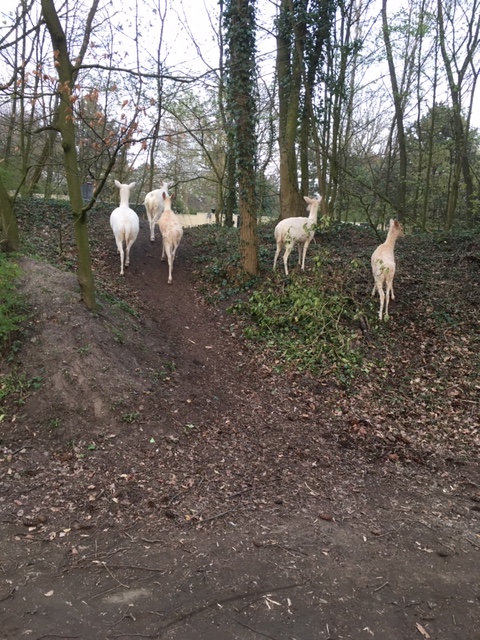
It turns out the answer was a big fat ‘yes’. I’ll do a proper review of Het Meerdal in another post, but suffice to say we had a really great time and we’re thinking very strongly of going back next year. There were lots of things to do, which, as in the UK, cost extra, so it really wasn’t a cheap holiday. But it’s a brilliant place to go as a family with children of any age, everyone was very friendly and spoke excellent English, and the kids loved it. We did explore the area on a couple of days but we spent most of the time in the park itself – partly because there was so much to do and partly because it just felt… well… ‘nice’. I’m not really sure how to explain it. The weather – dry and unusually warm – definitely helped. The woodland surroundings and the corresponding wildlife – red squirrels, deer and an array of different types of birds – was a huge part of it. But there was something else indefinable too. It was one of those holidays – rare for us, as you’ll know if you’ve read about some of our holiday disasters – where everything just went right.

Overall, in addition to the cost-saving, there were a few other advantages of going to Center Parcs in the Netherlands as opposed to the UK, as well (of course) as the odd disadvantage. I’ll try to sum them up below:

Advantages

  • Cost: I think I’ve already covered that pretty comprehensively!
  • Arrival/departure day: In the UK, you have to arrive and leave on a Friday or Monday. This is obviously inconvenient for half-term or for anyone wanting to book a week’s holiday from work. At Het Meerdal, we were able to go from Saturday to Saturday, which worked so much better. I’m not sure that the choice of day was completely free, but it was certainly more flexible than the UK, and I believe this to be true of other Center Parcs.
  • Cottage choice: I’m not sure if this is offered in the UK – it certainly wasn’t when we went, or perhaps you can do it if you pay extra – but as we booked far enough in advance (and this was actually only a few months), we were given the choice of which number cottage we wanted. There was a map, so we could see where they were – this meant that we were able to choose a cottage at the end of a block, near a playground and not too far from the Market Square, where most of the facilities are.
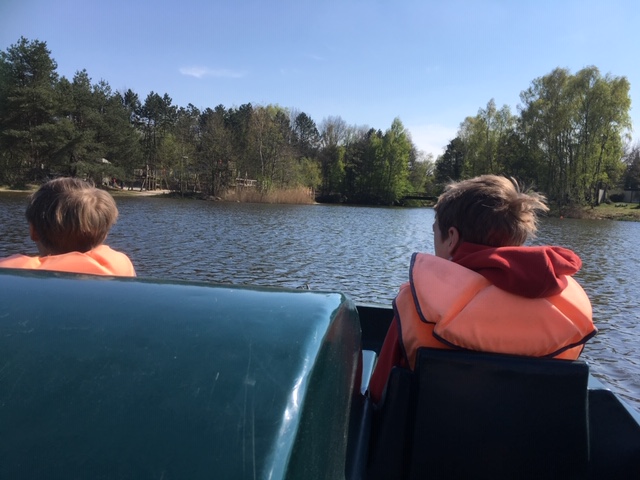
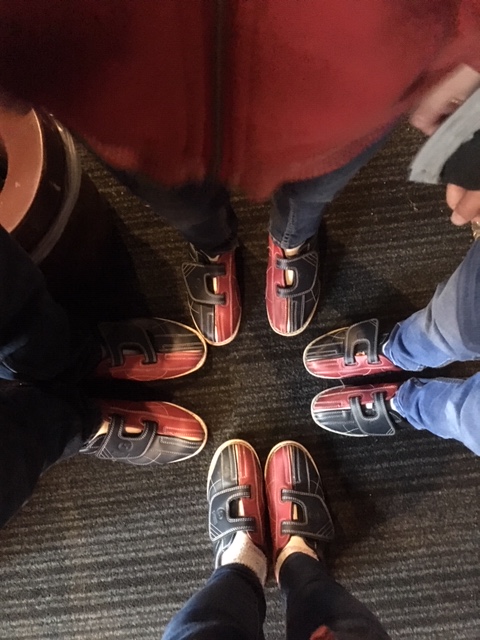
  • Free activities: This was another bonus if booking ‘early’, where we were given three free activity vouchers. These can’t be used for any activity but there is still a wide choice of activities to redeem them on. We used ours on pedalo hire and a family game of bowling (which was worth two vouchers).
  • Free evening entertainment: Evenings were relatively quiet at Het Meerdal, with the entertainment finishing fairly early, but there were shows and a quiz – depending on the night – all of which were free. From memory (and this may no longer be the case – feel free to correct me!), evening entertainment is not free in the UK – we certainly had to pay to take part in the quiz at Elveden!
  • Novelty of being in another country: Okay, so this might not be an advantage for everyone, but I always think it’s more exciting to go abroad for a holiday. The food is different, the language is different and it just adds a little extra to the holiday. It also makes it more interesting if you decide to leave the resort and explore the local area.
  • No need to book activities: It may well be that this would not be the case if we went at a busier time in the continent, but when we were there it was just the right amount of ‘busy’. There were plenty of people, so it didn’t have a ghost-town feel, but we had no problems at all booking any activities that we wanted to do, even if it was just half an hour before. This was certainly not the case in the UK, where we had to book everything before we arrived. Not only did it give the week a regimented feel but it meant that we had no option to change our minds and do things on a different day. In Het Meerdal, we were able to look at the weather and plan accordingly!

Disadvantages

  • Travel: This is the obvious issue, although it depends on where you live in the UK. We live less than half an hour from Dover, so it didn’t take us much longer to get to Het Meerdal than it would any of the UK options. In fact, had we gone to one of the other European options, it may actually have been closer. Of course, this wouldn’t necessarily be the case if you lived elsewhere in the UK. The cost of crossing the channel is also an issue. We were lucky enough to have free ferry tickets (click here to find out how!), but most would need to pay for these or for the Eurotunnel. That said, even including the cost of the channel crossing, the European options are cheaper.
  • Language: We didn’t have any issues at Het Meerdal, as everyone spoke very good English. However, the Dutch are renowned for their English speaking (their secondary education is conducted purely in English), but language may be more of a barrier in the French or German Center Parcs, for example. Evening entertainment was generally carried out in Dutch, although they did make sure that they repeated the quiz questions in English purely for us. Menus were often in Dutch and German, although English ones were provided when staff realised where we came from. We were one of only three British families we came across during our week at Het Meerdal – this wasn’t an issue for us, but it may bother others. It certainly wasn’t so easy for the boys to make friends, but they had each other and us – and they did make friends with one Dutch boy – so, again, it wasn’t an issue. So overall, language was never a problem but I guess it wasn’t as straightforward as being in an English-speaking country.
  • Cottage facilities: If you do a direct comparison between the cheapest accommodation that Elveden has to offer and the cheapest at Het Meerdal, Elveden has more facilities. The Woodland Lodge at Elveden offers a dishwasher, an oven, a DVD player and an extra TV in the main bedroom, none of which are offered in the Comfort Cottage at Het Meerdal. Linen and towels are included at the Woodland Lodge, but only linen is included at Het Meerdal (for a compulsory charge) and you have to make your own beds. BUT (and this is a big ‘but’), you can pay for towels and linen at Het Meerdal, and higher-grade accommodation (Premium Cottages, for example) do include all the facilities mentioned at Elveden. And – no surprise – even if you pay for these facilities, it still ends up cheaper than staying in the UK. In fact, you could even look at the cottage facility situation as being an advantage of the European Center Parcs – you have the option to save money by not having them, but don’t get the choice when you stay in the UK.

Overall, the disadvantages are pretty minor (if they’re even disadvantages at all) and are far outweighed by the advantages in my opinion. The price difference is, of course, the main draw, but there are many other reasons to choose Het Meerdal or one of its European neighbours. Although I’m sure that the summer holidays would be great too, I would recommend going at Easter or May half-term, when you have a better chance of avoiding the local school holidays (and having half-decent weather) – not only does this mean that you have a better chance of doing all the activities you want to do but it means fewer crowds, both in the pool and outside the park itself.

I very much doubt we’d go back to any of the Center Parcs in the UK now, but I’m pretty sure we’ll go back to Het Meerdal, and will probably explore some of the other options that the continent has to offer. If anyone else has been to both, I’d be very interested to hear your thoughts on the comparison!

(Disclaimer: A lot of the points made about UK Center Parcs are based on my memories of a trip 11 years ago, so may not be entirely accurate or up to date!)

*Yes, I know the UK is in Europe, and will remain so geographically regardless of whatever happens with (shudder) Brexit. However, I’m using ‘European’ and ‘the continent’ in this context to describe those Center Parcs based in the Netherlands, Belgium, France and Germany, and NOT in the UK!

Corfu – second time lucky?

Around 20 years ago, my now-husband and I went to Corfu for two weeks. This was back in the days when last-minute package holidays (especially to Greece) were really cheap, when all holidays were booked in person at a travel agents and when accommodation on arrival was all the rage. Remember that? You’d specify a resort and accommodation type (always self-catering for us back then) but you’d have no idea where you were actually staying until you got there. The not knowing didn’t really bother us at the time – it’s not as if you could research reviews on Trip Advisor back in the dark ages anyway! We didn’t have kids to worry about, we were young and fit and happy to walk if the apartment was on the outskirts of a resort, and it saved soooo much money. Plus it added an element of adventure (plus a sense of dread every time the coach pulled up at a dodgy-looking hotel and you panicked that it was yours). We’d booked accommodation on arrival a few times – twice in Crete, once in Cyprus and once in Salou – and it had worked out pretty well so far. In fact, the cheap-as-chips apartment in Salou had even got a separate bedroom (we were used to basic studios), as well as a fully-equipped kitchen with fridge-freezer, oven, etc. (we were used to a mini-fridge and two hobs!). So we were fans of the surprise hotel/apartment.

It didn’t work out quite as well the time we went to Corfu. The apartment itself was fine, as far as I remember – just a typical, bog-standard self-catering studio. The location was okay – on the outskirts of Kassiopi but within fairly easy walking distance of everything. The issue was the lack of any sort of reception desk or central area. This doesn’t sound like a problem, and when we first checked in it never dawned on us that it could be. The problem is when you have to leave your apartment by midday on your last day and then you’re not getting picked up until two in the morning. And let me tell you, this is a million times worse when you’re sick. Because, surprise surprise, like so many other holidays (see Sick of holidays?) – and actually, this was one of the first – our holiday was blighted by sickness.

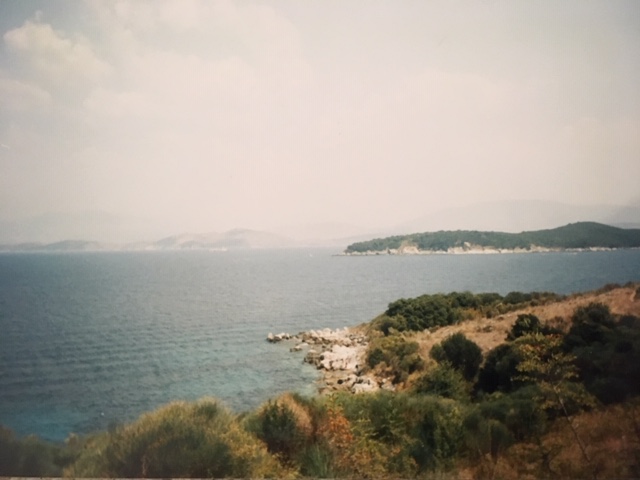
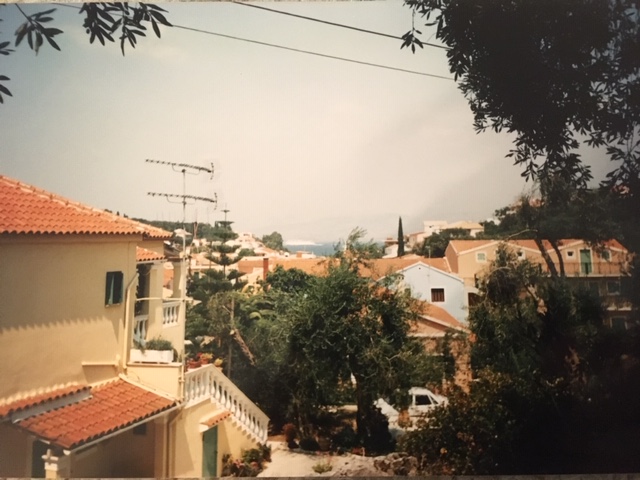
The view from nearby our apartments… I think!

The holiday started well enough. The weather was beautiful, Kassiopi was a lovely resort and we booked lots of excursions – including an introduction to scuba diving – with our rep (whom we had to meet at another hotel, of course, given our lack of a base). Not ones for lying about soaking up the sun (not that we had a pool for doing so), our first few days were busy. We caught a bus to Corfu Town. We went on a glass-bottomed boat ride. We hired a motorbike and explored the mountains (my husband was a biker, so not as irresponsible as it sounds!). We went on a long walk and found a beautiful, quiet beach, where I learnt to snorkel for the first time – I figured that I should probably master that before trying scuba! And then it all went a bit wrong…

Somewhere on the walk to the beach from Kassiopi… I think!

It was our first organised excursion and we were on a coach. I can’t remember exactly where we were going but I seem to remember it was evening, so I’m pretty sure it was a Greek night – you know, the sort of thing where they take you to a ‘traditional’ taverna in the middle of nowhere on a coach, where you eat Greek food, drink cheap wine and watch Greek dancing. We hadn’t got far when my husband started to feel sick. Driving along winding roads, stuck on a coach and feeling sick is never a great recipe. Neither is being stuck in the middle of nowhere, looking at food you can’t face eating and wine you can’t face drinking, with the knowledge that you have a long and twisting coach journey ahead of you to get home. To top it off, it may have been paranoia but I was starting to feel distinctly dodgy too. In the end, we had no option but to stop the coach in the next resort we came to, get off and take a taxi back to our apartment.

The next day wasn’t great. We weren’t sick but we certainly felt it, and we became very closely acquainted with the bathroom. The following day wasn’t any better and we realised that we were going to have to cancel all our excursions – we didn’t ever want to sit on a coach again, let alone be stuck in a wet-suit several metres under the sea… The remainder of our two-week holiday was spent taking it very easy. We stayed in the apartment a lot. We went for gentle walks around Kassiopi. We went back to the beach we’d found at the beginning of the holiday. We went to bars for a soft drink but we certainly didn’t attempt eating out. Basically, we didn’t want to do anything where we couldn’t ‘escape’. In hindsight, I’m not sure how much of it was about being genuinely ill and how much was psychological, but it made little difference at the time – let’s just say that it wasn’t exactly a brilliant holiday!

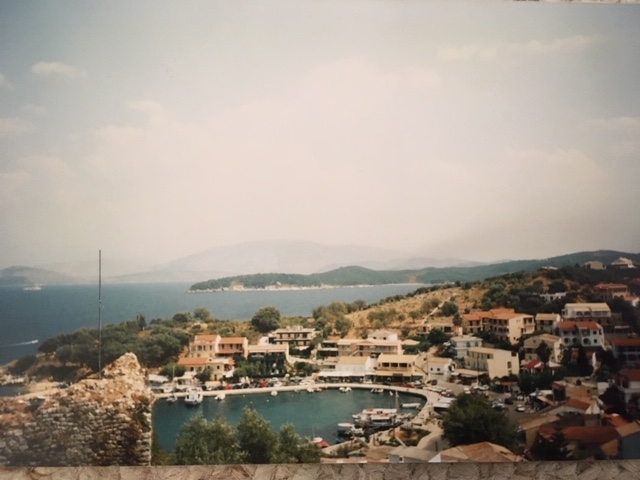
The harbour at Kassiopi, viewed from the castle… I think!

The final straw – and the reason why our apartment wasn’t ideal – came on the last day, when we had to pack up and leave our apartment by midday. Because there was no reception area in the hotel, we couldn’t leave our cases there. Instead, they were picked up by our tour operator and taken to a secure storage area. This was all well and good but it meant that we had no access to anything in them until we were picked up at two in the morning. We also had nowhere to go. Not only did we not have our apartment but we didn’t even have a reception area – let alone a pool – where we could hang out (and have easy access to a toilet). Instead, we had to wander around Kassiopi for 14 hours, feeling sick and carrying everything we might need for the day. There was a craze at that time for bars to show films that had only just come out at the cinema on big screens outside (totally illegally, I’m sure). This at least meant that we could work our way from bar to bar, where we could legitimately sit with a diet coke and toilet access for a couple of hours, before moving on to the next bar and the next film. It wasn’t ideal but we got through – but suffice to say that after a day of this, and with the added issue of being tired, we weren’t feeling good when the coach finally arrived to pick us up and reunite us with our cases at 2am.

It didn’t get better. Being on the coach made me feel worse, and it wasn’t long before I was being sick into a sick bag I’d conveniently picked up from the plane.* We arrived at the airport to find out that our plane was delayed. Well, to be fair, it wasn’t just our plane – forest fires meant that no planes, including the one we were supposed to be flying home on, were able to land. We spent a hellish half-hour in the queue for check-in, struggling to stand and worried that an emergency toilet trip would see us lose our place in the queue. After saying goodbye to our cases for the second time that day (although technically it was the day after by now), we settled ourselves on the floor for a long wait. The airport was packed, as you can imagine, so there was no hope of a comfortable seat anywhere. After a few hours we were told by our tour operators that we were entitled to a free meal – unsurprisingly, we didn’t take them up on it! Finally, after a four-hour wait, we were lucky to find out that our plane was the first to be able to land, and we were eventually able to board and begin our journey home. Adding to my theory that there was a large psychological element involved in our sickness, we both felt a lot better once we were on the plane and knew we were finally going home – either way, neither one of us really wanted to go back to Corfu again!

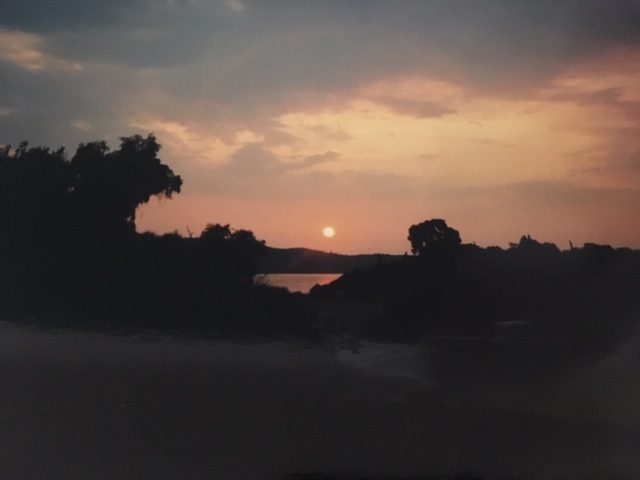
Sunset somewhere in Corfu – needless to say, we took very few photos and I can’t remember much about those we did take!

Once back home, it took a while to fully recover. My husband saw the doctor and there was talk of E.coli; whatever it was, it took its toll on us both psychologically, and we became virtual agoraphobics for some time afterwards. We were scared to use public transport, go out for dinner or go to the theatre or cinema, and even – yes, really! – scared to go on holiday. These were all things we loved doing but where we felt trapped – and this started the feelings of anxiety, along with the corresponding feelings of nausea, and on the cycle went. Eventually, of course, we picked ourselves back up. We started going out again and built up to things slowly, holidaying on the Isle of Wight before we dared to try a plane journey again. We went on planes again in the end, of course, even returning to Greece (Rhodes and Crete), but we never booked an accommodation-on-arrival deal again, we still always avoid night flights and we never returned to Corfu.

In fact, we haven’t actually been back to Greece at all since having the kids. There are a couple of reasons for this, with the main one being cost. Greece never seemed to be offered as a cheap package option when the kids were little, unlike the case 20-odd years ago. If you sorted holidays in order of price, you’d have to scroll through an awful lot of ‘Spains’ before you got to a Greece. If you book independently, it’s the same situation – it’s generally a lot cheaper to fly to Spain than it is to Greece (understandably, as Greece is further away). Another reason is that Greece doesn’t seem to cater as ‘obviously’ to children as Spain does. Spain is full of large hotels with kids clubs and loads of other child-friendly facilities, but there are far fewer of these in Greece. And when our children were little – and now too sometimes, if I’m honest – we wanted to go somewhere where we knew the kids would be catered for. Happy kids = happy parents. Another reason, and going back to Corfu, is that package deals to Greece always seem to have awful flight times. Arrive at midnight? I’d rather not. Fly home at 2am? No, thank you! So the holidays we’ve taken with the children have generally centred around France and Spain – cheap and child-friendly.

It’s all change this year. I blame my youngest son, who was studying the Ancient Greeks at school and asked to visit Greece. Given that all of our summer holidays since 2011 bar one have been to France (sometimes with added Spain), we decided that it really was about time we went somewhere else – and why not Greece? Deciding where to go was less easy. We’d never been to Kos, Zakynthos, Kefalonia or Santorini. But would there be enough for the children to do there or would they get bored? For that matter, would there be enough for us to do over two weeks?! The smaller islands also tended to be more expensive and had fewer flight options. Crete or Rhodes are much bigger, with more to do in general and more hotel choices, especially for the kids. But we’d been to them both more than once, and we’d already visited the main attractions. This left us with Corfu: a compromise in terms of size and a compromise in terms of having visited before. Because, of course, although we had been there, we had never actually had the chance to do much or see much of the island! And, as one of the bigger islands, we figured that there would be more choice in terms of flight and hotel. Hmmm. We tried package deals first but soon realised that all the flights were night flights. We then had a look at Travel Republic, where you can book separate flights and hotel but with the security benefits of it being classed a package (this came in very handy when Monarch went bust a couple of years ago – see Monarch mayhem). The flight options were great – lots of (daytime) choice and cheaper than we expected. Hotels were more of a problem. We wanted half-board ideally – as my youngest son is vegetarian and my eldest is picky as hell, going out to dinner can be tricky, particularly abroad, whereas a half-board buffet allows them to choose things they like, try things they’re not sure about and basically not starve. Unfortunately there were very few hotels available that offered half-board, and most of those that did were extortionate in price. Once I looked in more detail at the rest, most of them seemed to offer a set meal – or at least very little choice – which left us no better off than going out to dinner (and possibly worse). There was very little on offer with kids’ facilities either. We weren’t necessarily looking for the all-singing, all-dancing hotels we were used to in Spain, but we were hoping to spend at least a few days chilling out and relaxing at the hotel; however, most of the hotels we could see only had a tiny pool and no playground or area for the kids to play – let alone a kids’ club or evening entertainment. As is always the way, the few that ticked the ‘kids’ boxes were either extortionate or in a bad location. And as is absolutely always the way when you plan a holiday too early, the only one that ticked all our boxes and was in our price range – and which we set our hearts on – had no space when we finally tried to book.

Eventually, we gave up on hotels entirely and decided to go back to the good old days of self-catering apartments. As a compromise, this one (Matoula Apartments, if you’re interested!) does indeed have a pool, a bar and a reception area (not that we have a night flight this time!). We even have a two-bedroom apartment rather than a studio. Most importantly, we’ve been able to do our research and are confident that this one ticks the most important boxes. Hopefully, this time we’ll be able to experience a bit more of Corfu and get back our love of Greece – this time with no E.coli, forest fires or 2am pick-ups!

*TIP: I always pick up sick bags on planes and ferries to keep in my bag for emergencies – you never know when you might need one!

Meet the holiday obsessive

Hello. My name’s Vicki and I’m addicted to holidays.

This is kind of a new blog and kind of an old one. I’ve been languishing over on Blogspot for a few years, but the lack of interaction on that platform, topped with the demise of Google+, has led me over to WordPress. So welcome to any new readers and welcome back to anyone who’s followed me over from my original blog!

Thought I’d carry my old photo over from my old blog – this was taken in the South of France several years ago!

For the new readers, this is not a travel blog, much as I would like it to be. I have two children, I have a job, I have a husband, friends and a social life; this doesn’t leave a whole lot of time for travel, and leaves even less for writing about it. I am not a ‘traveller’ – I’ve not yet been to South America, I’ve never stayed in a youth hostel and I certainly haven’t backpacked my way across the world. What I am is someone who loves holidays, and I go on one every opportunity I get. I like holidays with my family, I like to go away with just my husband and I like holidaying with friends. I like camping, staying in hotels and hiring cottages. I like walking in the Cotswolds, city breaks in Paris, exploring Australia and lying on a beach in Jamaica.

I also like to share my holiday experiences. I might share a review of a hotel I’ve visited. I might share tips. I might share photos. I might share a funny holiday story. I might just prattle on about holidays. If nothing else, I’d say my blog is a bit of an eclectic mix! I don’t blog as often as I’d like to in an ideal world; I may go months without writing and then blog four times in a fortnight – and of course it all depends on whether I’ve been anywhere to write about! I’ve imported all my old posts over from Blogspot, so there’s plenty to read currently, but I’m still finding my way around WordPress and have a lot to learn. But if you’d like to join me on my journey – and assuming I’ve managed to successfully add the ‘follow’ button – then please give me a follow and maybe even add a comment. I’d love to hear from you!

And in the meantime, my next holiday is exactly a month away, so I should have something to write about soon!

Holiday hypotheticals

Those who know me know that I’m a planner. I write a daily to-do list to ensure that everything gets done, I have longer-term lists of everything that needs doing over the next few months and then I plan those things in as much detail as I can. Holidays are no exception. I can be spontaneous (honestly!) – I enjoy just wandering and seeing where we end up, and planning as we go is one of the things I enjoy about camping around France. However, on the whole, my holidays are planned meticulously. I check flight times and prices if it involves a plane; I look for possible stops on the journey if we’re going to be driving. I look at different hotels/campsites/apartments before booking and read reviews to find out more about location, cleanliness, staff, etc. I research all the things there are to do in the area, and often check out places to eat too.

The planning is actually one of the things I like about holidays. If ever I have a momentary panic about the amount I’m spending on one weekend/week/fortnight of my life, I remember that it isn’t just that short amount of time – the impact of a holiday lasts far longer. In addition to the time you spend actually on holiday (still the best bit, obviously), you also get the memories afterwards, plus the lasting wellbeing benefits of having had some time off. Before the holiday, you get the time you spend planning and looking forward to the holiday. If I’m having a bad day, I think about all the exciting things we’ll be doing on holiday. If I’m feeling stressed, I know I’ll be able to forget about my worries for a while when I’m away. If it’s cold, I picture myself lying on the beach in the sun. I enjoy planning what we’ll do and checking out websites for attractions. I like trawling through Twitter, Instagram and travel blogs to find out more information. I check Trip Advisor religiously to read any new reviews for where we’re going. I look at YouTube to see whether there are any videos of our destination, and I even scroll through Google images just for fun. Obsessive, I know (hmmm, wonder where I got my blog title from?!), but it cheers me up.

Of course, as with most things in life, my planning does occasionally have its downsides. The planning has to start before the holiday is actually booked – how else can we decide where to go, where to stay and how to get there? This means that I am initially planning hypothetical holidays… and sometimes I might get just a little bit carried away. Although sometimes I am simply researching flights or hotels for a specific holiday we’re definitely going on, sometimes I have a habit of planning holidays that aren’t definite – or even, on occasion, likely. I’ve done it many times. Sometimes it might be looking in more detail at somewhere that I heard someone mention or saw on TV, for example. Sometimes we might have a bit of extra money (okay, not very often) and I’ll start planning all the exotic places we could go with it. Sometimes my husband or the kids might mention a destination so I’ll look up possible holidays there. Sometimes my planning is relatively sensible – starting to research possible destinations for the summer holidays, for example – and sometimes it’s less so – researching places I’d love to visit and probably never have a hope of actually seeing. I get obsessed with these places (there’s that word again) and bookmark them on Trip Advisor, regularly checking reviews for hotels I’ll probably never visit. I can still tell you the name of the hotel in Cyprus and the one in Mexico* that I was convinced we were going to stay in (but I won’t, because I’ll get sad again).

And it’s that word ‘sad’ that is the downside. Hand in hand with booking any holiday – but particularly a hypothetical one – often goes disappointment. Because that holiday doesn’t always happen. Maybe you haven’t got as much money as you thought you had. Maybe you’re the only one who wants to visit that destination. Maybe the hotel you fancied is fully booked. Maybe the dates don’t fit, the price has gone up or a bad review has changed your mind. Maybe it seemed like the perfect holiday but somehow it’s just not right, or maybe it was a pipe dream that was never going to happen anyway. When your plan for a holiday – or part of a holiday – doesn’t reach fruition, it’s hard not to feel disappointed. If you’re like me, you’ve planned every last detail, looked forward to it and imagined yourself there… and now it’s not happening. And even if you’re able to mitigate that disappointment by booking another holiday – or another element of it – you often find that it just doesn’t match up.

It must be a year ago that we decided to go to Greece this summer, when our youngest expressed an interest in visiting after learning about the Ancient Greeks at school. We talked for a while about where to go – one of the bigger islands like Crete or Rhodes, which we’d already visited but which we knew had lots to do, or one of the smaller islands, which we’d never been to but which might have less to entertain the kids (or us). We opted for Corfu in the end – one of the bigger islands but somewhere we’d only visited once and not seen much of (due to food poisoning – see Corfu – second time lucky?). I started looking at hotels, both through packages and independently, and found one that we all really liked the look of. It was a perfect compromise – big enough to have waterslides and a buffet restaurant but not overly big or ‘British’. The reviews were good and I bookmarked it on Trip Advisor, checking regularly. The trouble was, despite having planned this holiday, we hadn’t actually booked it. We were waiting to have enough money; we were waiting to get my husband’s leave organised; and we just generally hadn’t got around to it. So when we finally went to book the hotel, we were gutted to find that it was already booked up for the dates we could do. It was hard not to be disappointed; we had set our hearts on it and nothing else available ticked all the boxes.

Even more recently, I had the disappointment of the Sardinia holiday that won’t happen. I realised that my husband and I will have been together for 25 years this May – what better excuse for a holiday than a silver anniversary celebration?! I started trawling Travelzoo and Secret Escapes for some exciting cheap deals and found a few possibilities. We found a cheap package to Hong Kong, which we were really tempted by, but we thought that it was maybe a little too extravagant to justify. I started looking at easyJet for prices to various European destinations, and hit upon Sardinia. We could fly there and back for less than £100 each, and hotels seemed to be surprisingly good value. We planned four days over our anniversary, feeling chuffed that it would be both special and affordable. Then my husband went to book the time off work – and it turned out that someone else had already booked that time period and he couldn’t go. Sardinia up in smoke.

Of course, you won’t be surprised to learn that I deal with holiday disappointment in the same way as I deal with anything else that makes me sad – I start planning a holiday. Yes, I know – this is potentially rather counterproductive, but it usually works. In the case of Corfu, having found out that nothing was going to live up to our expectations, we realised that we’d have to change our expectations instead. We decided to forget hotels and look for apartments where we could go self-catering (like all my Greek holidays of years gone by!). We found some nice apartments with a pool and near the beach, with good reviews on Trip Advisor. This time we booked it pretty quickly, to avoid further disappointment, and now I can start planning what to do and where we might like to eat out, given that we won’t have a hotel restaurant (silver lining and all that!). In the case of Sardinia, we realised that no one at my husband’s work had booked off May half-term, so we booked it quickly. We’re now going camping in Dorset with the kids – not exactly the romantic child-free break in the sun that we originally had planned, but I’m now enjoying researching Dorset instead – plus I’m sure we’ll at least fit in an anniversary dinner somewhere.

The moral of today’s blog? Plan away by all means, but don’t invest in it too much if it’s just hypothetical. And if you face disappointment? Planning a holiday always helps…!

* We actually did book that Mexico hotel in the end, for October 2020. No surprises that we didn’t go! It’s rebooked for October this year, so we’ll see…

Magical municipals

Over the last 12 years, I’ve stayed at an awful lot of French campsites. I’d hate to hazard a guess at how many but, given that we used to spend up to five weeks travelling from campsite to campsite, often only staying a night or two before moving on, I can guarantee the number is well into the double figures. With number comes diversity – we’ve stayed in a lot of different types of campsite. We’ve stayed in all-singing, all-dancing campsites, like Le Soleil in Argeles-sur-Mer, with 800+ pitches, a pool, kids club, restaurant and a host of other facilities. At the other end of the scale, we’ve also stayed in small, quiet campsites, such as Les Portes du Trièves near Grenoble, where the toilet/washing block and reception are the only facilities. Of course, we’ve also stayed at lots somewhere in between, and the truth is that we like all types. They all serve a purpose – sometimes it’s good to have somewhere quiet, where you’re guaranteed to get a pitch and a good night’s sleep. Sometimes it’s nice to stay somewhere buzzy, where you can swim or eat out without leaving the campsite and the kids are always entertained.

The swimming pool at Le Soleil in the south of France

With diversity in size and facilities, of course, also comes diversity in price – and we have found a huge range of prices throughout our campsite experiences. On the whole, we’ve found camping to be cheaper in France than in the UK, paying over 50 euros a night for some of the bigger campsites but as little as 10 euros in some of the smaller ones. The cheapest campsites, we’ve discovered, tend to be municipals. For those who have never come across these before, municipal campsites are owned by the local authority and you can find them in most towns and large villages. They tend to be on the outskirts, but it is usually walkable to the town/village and thus to any facilities you may need. The campsites themselves tend to be low on facilities, as you would expect for a low price: you should find decent sanitary and washing up facilities, probably a couple of washing machines and maybe a children’s playground – and that’s probably it. However, you will often find that you are given free or reduced access to the local swimming pool and occasionally other local facilities (we’ve been offered free mini-golf and reduced cinema tickets in the past). Unless you have a desperate need for bells and whistles on site, municipal campsites make the perfect base for exploring France. You’re likely to find one near most major sites and attractions, and you can usually walk into the town for dinner if you don’t fancy campsite cooking.

Municipal campsite in Autun
Free municipal swimming pool in La Roche-Chalais
Municipal campsite in Gignac

Having just said that municipal campsites are low on facilities, there are exceptions. We had stayed at La Hallerais, just outside Dinan in Brittany, at least three times before we realised it was a municipal campsite. It has a small heated pool, tennis courts, a playground, table tennis and mini-golf, all free of charge. It also has a restaurant, a games room and a small shop, plus a large, well-staffed reception area. We returned (and still do) for several reasons: we really like the location, with its beautiful riverside walk into Dinan; it has good facilities and plenty to keep the children occupied; and the toilets and showers are some of the biggest and cleanest we’ve come across! But another huge draw has always been the price: a pitch for a tent and a family of four is just over 20 euros per night at the time of writing – and that’s including all the facilities mentioned above! We had always wondered why it was so cheap compared to other similar campsites, until all was explained when we noticed the word ‘municipal’ on its website. So while you won’t get anything on the Eurocamp level at a municipal campsite (or at a Eurocamp price!), there are bigger, more facilitied (is that a word?!) municipals out there if you look, so don’t assume they’re only for those who like a basic campsite!

One of our many pitches at La Hallerais over the years
Kids’ swimming pool at La Hallerais
Wildflowers at La Hallerais
The riverside path from the campsite into Dinan

Even if you’re not keen on spending the night under canvas, you don’t have to rule out municipal campsites. Just like Eurocamp, municipal campsites do mobile homes too – and at a fraction of the cost! As a general rule, you can expect your mobile home to have a fully equipped kitchen, with a fridge, hobs and microwave (but no oven or dishwasher – sorry!), a toilet and shower, indoor and outdoor table and seating, and separate bedrooms for you and the kids (if travelling with a family). They cover all your needs – you have all the facilities you need in the home itself, plus you get to use the campsite facilities too – laundry, playground and whatever else you need. Hey, you can even use the campsite toilets and showers if yours are being used! You’ll need to bring your own towels and sheets (although they can often be provided at a cost) but otherwise you have everything you need right there. It’s drier than a tent, more private than a hostel and cheaper than Airbnb – what’s not to love?! Just as an example, we recently spent a week in a mobile home in a municipal campsite at La Roche-Chalais in the Dordogne – it cost 190 euros for the four of us. A Eurocamp mobile home in the Dordogne over the same period would normally cost around £1,000. Yes, you’d get more facilities – but are they really worth £800 a week?! As with the price of camping, you can expect to pay more for a mobile home in those campsites with more facilities or in particularly desirable locations. Either way, it’s an extremely cheap way to holiday if you don’t like tents!

Our mobile home in the Dordogne

A few final tips: firstly, the Michelin guide to camping in France is particularly helpful for finding campsites, municipal or not. Secondly, you won’t always find a website – or at least, not a very good one! – for municipal campsites; be prepared to do a bit of digging, emailing or even phoning. Thirdly, as municipal campsites don’t tend to be frequented much by British tourists, the staff often speak no or limited English. If you speak a little French, it does come in very handy – if not, make Google Translate your friend! Finally, if travelling with children during the summer holidays, the middle to end of August is the cheapest time to go. What’s classified as high season varies in France, but the middle of August onwards is apparently mid-season in the Dordogne, with Brittany following suit a week later – travelling at the beginning of August would have meant paying high-season prices, so it’s a potential saving of £100-200 a week to travel a bit later!

Sadly, I’ve not come across municipal campsites anywhere other than France, although I hear that Portugal has a similar system. But if you fancy a cheap French adventure, give them a go – after all, money saved on your accommodation means more money for eating, days out and, of course, your next holiday!

Swapsies!

A couple of years ago, I wrote about one of the real reasons behind my holiday obsession (What’s really important). Much as I love sun, exploring, doing new things and seeing new places, a major reason for my love of holidays was the quality time I got to spend with my family. Up until a couple of years ago, my husband had been a teacher (as was I, pre-kids). Anyone who has been or known a teacher will understand that the ‘long holidays’ thing is a bit of a myth. My husband spent evenings and weekends working. He spent much of the ‘holiday’ time working. And when he wasn’t working, he was thinking about work. It was only when we went away on holiday and he physically couldn’t work that he would actually start to relax. He would spend the first day or so visibly uncomfortable, clearly thinking about the things he should/could have been doing, and feeling frustrated that he couldn’t do any of them. But after that, once it was clear that he couldn’t do anything about it, he would relax and start to enjoy the holiday, and we would actually get quality time together without the spectre of work hanging over us. Since he gave up teaching, things have been so much better. We get evenings and weekends together. And much as I still love my holidays, they have become less ‘necessary’ in terms of ensuring family time.

My last blog was all about going on too many holidays (Too many holidays? Okay, I concede). At least, that’s what it looks like at first glance. Dig a bit deeper, and you’ll realise that I’m moaning about two things: too many short holidays and too much work. And it’s just started to dawn on me that in many ways I’ve swapped places with my husband.

First things first, let’s make it clear: I haven’t actually got too much work. I only work part-time, and this year was the first time in years that I’ve earned enough to pay tax, so I’m clearly not working ‘too much’. However, because I ‘only’ work part-time, I’m also responsible for the children and for the house, and this means that only a little bit of work can feel like a lot when it’s on top of everything else. You see, as well as the obvious jobs, like the washing, cooking, cleaning, school run and cooking, there are all those niggly little things that also need doing – things like paying bills; making sure that birthday cards and presents are bought, written, wrapped and sent; filling in school forms; making sure that homework is done; and a whole host of other things that don’t sound like much but actually take up a lot of time. I could spend an hour a day doing things that don’t ‘show’ and don’t feel productive but without which things would start to quietly fall apart. For example, in the last couple of days, I’ve filled in a whole bunch of forms for Cubs and Scouts; logged into online banking to pay a credit card bill; organised a costume for my son’s French day at school; remembered to feed my son’s triops (look it up!); and ordered and collected a prescription for the cat’s flea and worm medication – among other things, and on top of work and the usual chores. Ask most working parents and they’ll tell you that it’s staying on top of these ‘little’ things that often pushes them over the edge.

The other reason why work can often feel too much is due to the nature of being self-employed – I work as a freelance copy-editor and proofreader. And while there are many advantages to working from home and being in charge of your own time, there are disadvantages too. Work is like buses – you can go some time without much or any work and then all of a sudden loads comes at once. And the trouble is, because you’ve spent time without work – or you know that you might do again in the future – you don’t feel like you can turn work down when you get it, and so you agree to everything. The trouble is, if you turn down a job, you’re not necessarily losing just that job – the client will have to go elsewhere, and there’s a risk that they may return to that ‘elsewhere’ for their next job too, so you may be turning down future work as well. And because you don’t get paid sick pay or holidays, you feel extra pressure to take on work when you get it. As you can imagine, holidays can be a particular issue, as no one covers for you while you’re away – I often end up working all hours before I go away and as soon as I come back so that I don’t have to turn anything down. The end result is that although sometimes I have very little work, and can comfortably fit in a little ‘me time’ as well as housework and childcare, other times I end up taking on more that I can comfortably manage, and have to work evenings and weekends just to get it completed. And when I’m not working, I’m thinking about work and all the things that I should be doing. Yup, I sound just like my husband.

So why did my last blog post complain about having too many holidays? At the beginning of this post, I said that holidays were the only time when my husband managed to relax, so why isn’t it the same for me? The key is in the word ‘short’. At the beginning of this post, I also mentioned that my husband would spend the first day or two worrying about not being able to work, and it would take him a couple of days before he could relax. And because the majority of my ‘holidays’ this year have been short breaks, I’ve not really had the time to chill out and forget about work. I have spent the first couple of days or so worrying about the work I should be doing and then, just as I should be able to start relaxing, I have had to come home again. Add the extra work needed to accommodate the holiday in the first place, not to mention the usual holiday organisation, and the holidays have actually ended up adding to the stress rather than relieving it. We end up with a vicious circle where I’m working all hours and in desperate need of a holiday, and then said holiday results in me working all hours to make up (and pay) for it. And as my husband takes the kids out at the weekend so that I can get some work done, and as I say no to watching a film together or going out for lunch because I can’t spare the time, I realise: I have become my husband.

For once, there’s no real conclusion to this post. I still stand by everything I said at the end of my last post. I need to practise saying ‘no’ more – no to more work than I can comfortably manage, no to badly timed days/nights out or short breaks, and no to those little mundane things that shouldn’t stress you out but somehow impact so much on your time. I need to switch off from work when I’m not actually working, making use of my auto-reply, not checking my emails and making a concerted effort not to think about work during my spare time. I need to schedule in time to enjoy the simple things like reading, exercising, getting out in nature – even just watching Netflix with my husband and sharing a tub of Ben & Jerry’s. I had already realised the importance of these things, but it’s only since noticing the parallels between my behaviour and my husband’s that I have realised just how important it is to achieve that work-life balance. I don’t want to spend my life living for my two-week summer holiday or my week in October – that’s just wishing life away. I want to live the rest of it, to enjoy my evenings and weekends and my short breaks – hell, to enjoy my work (which I actually kinda do, when I’m not feeling pressured). I don’t know a magic answer, but I’m working on achieving this. It’s hard to change your habits or your mindset, but I’m well aware of the trap that I’m falling into, and I’m determined to drag myself out of it rather than fall in deeper. Things are slowly changing for the better. Despite being super-busy with work the week before, I made sure that I didn’t think about work when I was away for my sister’s wedding recently. I refused to check my email and we made time to catch up with friends, go for a walk and have fun with the kids. I can’t say that I was physically relaxed when we got home (I was shattered!) but I certainly felt better mentally. Work was very busy in the week after I got back, due to an unavoidable deadline, but I made sure that I took time off at the weekend (even though it was tempting not to) to enjoy the sun and spend time with my family. This week, work has calmed down. Instead of using the spare time to do all those other jobs I keep putting off, I have fitted in some exercise, activities with the kids and some good old time in front of the TV. Tomorrow I’m catching up with some friends for brunch, and I won’t feel guilty about it. I have spent enough of my spare time working recently that I shouldn’t feel guilty about enjoying the spare time I have this week. I confess I still really can’t wait until my two weeks in France this August, when it will be impossible to do any work and I really will be able to relax and forget about it. But until then, I am going to enjoy the other things in life: the bigger things, like the two other weddings I have coming up, the night away to celebrate my mum’s birthday and the concert in London with my husband, but also the ‘smaller’ things, like just spending time with those people who matter to me. At the risk of sounding like a cliché, life really is short and we shouldn’t waste it worrying about work. Much as I generally enjoy my job, I work to live rather than the other way around – and if that’s you too, make sure that you get out and live that life you’re working so hard to have!

Taking the time to appreciate the beauty of Corbridge on my recent trip to Northumberland